Rabid Bats Reach Record Numbers in LA County
Posted on 10/01/2026
Rabies remains a public health concern worldwide. Although it is preventable, it causes tens of thousands of deaths globally each year, with most human cases linked to exposure to dogs in countries where the dog strain of rabies is still present. While the dog strain of rabies was eradicated in the United States through routine pet vaccination of pets, other strains of rabies continue to circulate in wildlife, including bats. All strains can infect any mammal and cause disease.
Rabid bat detections can vary year-to-year, but Los Angeles County has seen a steady upward trend for more than a decade. Peak season typically occurs in late summer. In August alone, 24 rabid bats were confirmed, with nearly one in three (32%) bats submitted for rabies testing by residents was found to be positive.
Rabid Bats Found Across Los Angeles County
Rabid bats have been found in every part of Los Angeles County, from suburban areas such as the San Fernando Valley to urban areas like downtown Los Angeles, in office buildings, parks, schools, businesses, and residential backyards. One third of bat encounters occur indoors, where exposure risk is higher.
What Counts as Rabies Contact or Exposure?
Exposure to a rabid bat, or a bat that might have rabies, can occur anytime saliva or tissue from the bat could enter the body, such as through a bite or scratch, or contact with a wound, mouth, nose, or eyes.
Bat bites are very small, and feel like a pinprick, so they may go unnoticed by a sleeping person. Anyone who wakes up to find a bat in the room, or finds a bat near a sleeping person, child, or pet, should treat it as a possible exposure and contact your local animal control or Public Health right away.
If possible, do not release the bat so it can be safely collected by local animal control for testing.
Public Health Reminds Everyone in LA County: Never Touch a Bat
The most important rule is simple: Never touch a bat or any wild animal and never allow pets to interact with them. Even small or unnoticed bites can transmit rabies.
Other safety practices include:
- Report bats right away: If you find a bat outside your home, carefully cover it with a box or container if safe to do so and call animal control immediately for collection and testing. Do not release it. If inside your house, remove all humans and animals from that room, close off the room, and call animal control to retrieve it for testing.
- Seek medical advice immediately: Rabies is preventable with post-exposure prophylaxis (PEP), a series of timely vaccines.
- Vaccinate your pets: Rabies is 100% fatal in animals once symptoms begin, but completely preventable through vaccination. This includes vaccinating indoor-only cats and older pets. Protecting your pets from rabies is one of the best ways to protect your whole family.
- Know signs of illness in bats: Bats active during the day, on the ground, or unable to fly may be sick. Contact your local animal control immediately for collection and testing.
- Understand the risk: In recent years, about 17% of bats encountered by people or pets in LA County test positive for rabies, rising to as high as 33% in late summer.
- Bat-proof your home: Search any openings ¼ inch by ½ inch or larger (to include electrical and plumbing holes) and apply caulking. Install heavy duty wire mesh over vent openings. Ensure all doors to the outside close tightly. Always use window screens, chimney caps and draft-guards beneath attic doors.
Residents can learn more about what to do if they encounter a bat by reviewing Public Health’s fact sheet: What To Do If You Find A Bat (PDF)
For more information, visit: http://ph.lacounty.gov/rabies
Who to call: Veterinary Public Health
Phone: 213-288-7060
Email: [email protected]
Website: publichealth.lacounty.gov/vet
Upcoming Meetings & Events
Join Our Mailing List

Sign up here to receive meeting agendas.
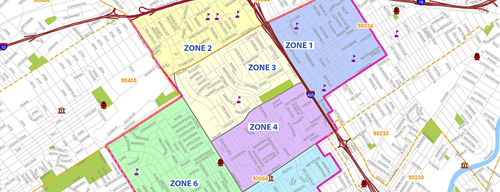
Area Boundaries and Map
Want to know how your Neighborhood Council money is being spent?Click here, then select Foothill Trails District Neighborhood Council from dropdown menu.
For details, then click on "MER" (Monthly Expenditure Report).